How to Adjust Mirrors to Reduce Blind Spots
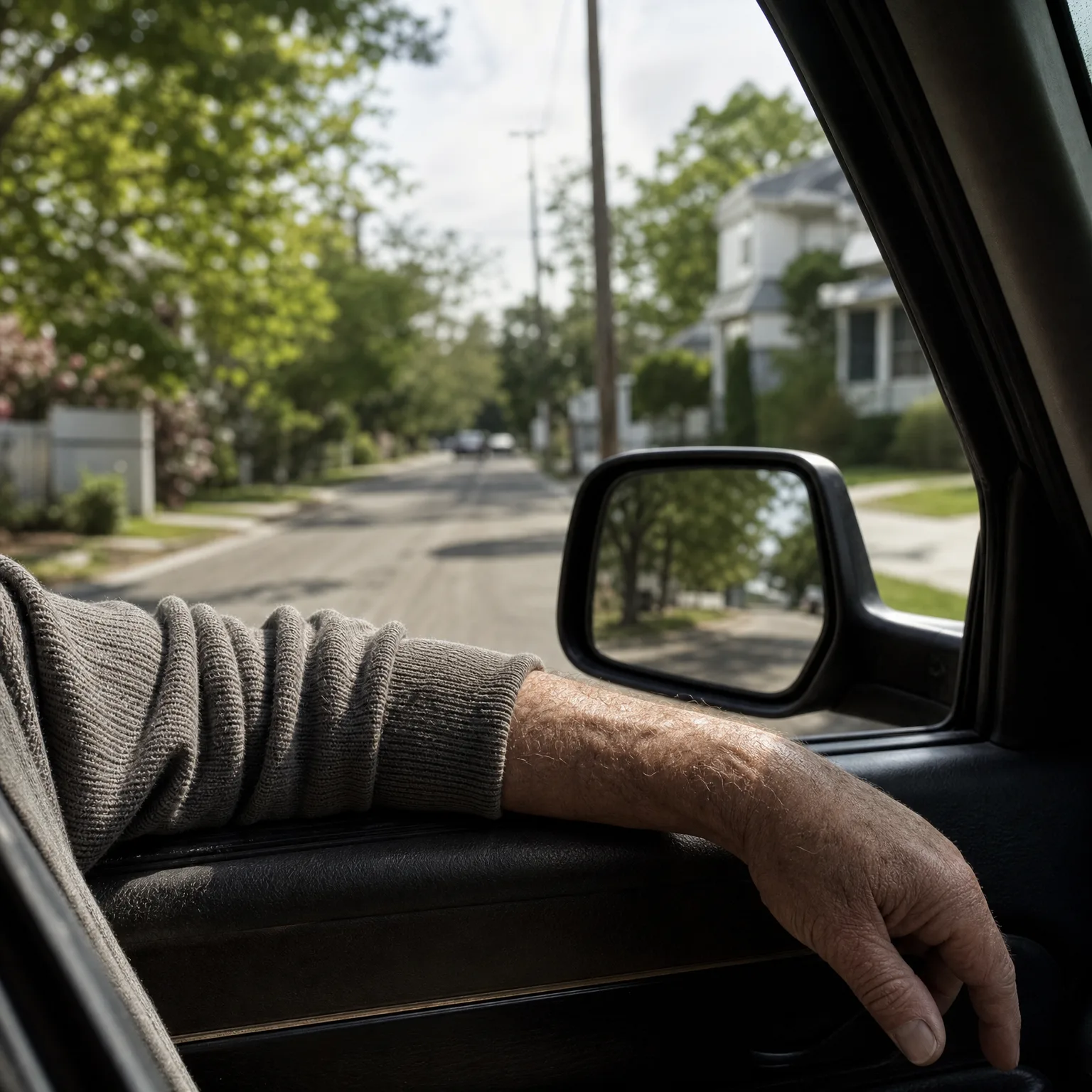
Tilt your side mirrors out wider than feels natural, so the view picks up where your rearview mirror leaves off.
Set the side mirrors wider than you're used to
Most drivers aim their side mirrors to show a sliver of their own car. That's what creates the blind spot, because the same stretch of road is now visible in three mirrors at once and nowhere else. Widen each side mirror until your car just disappears from view, and a car passing you will show up in your rearview mirror, then your side mirror, then your peripheral vision, without ever vanishing between them.
This works the same way no matter your age or what you drive. It's a setting, not a habit, so it stays correct until someone moves the mirror again.
Your seat position comes first
Mirrors are set relative to where your eyes sit, so if your seat moves, your mirror angles are wrong until you check them again. Sit the way you actually drive, adjusted for comfort and reach to the pedals and wheel, before touching any mirror.
If someone else drives your car regularly, like a spouse or a grandchild, the mirrors likely need resetting after they've had the seat. It only takes a moment, but it's easy to skip.
If you've changed your seat height or started sitting differently because of comfort or a health issue, that's also a reason to redo the mirrors rather than assume the old setting still works.
What people get wrong about checking blind spots
The instinct is to still turn your head and look over your shoulder before changing lanes, even after widening the mirrors. That's a reasonable habit to keep, but if the mirrors are set wide and correctly, you shouldn't need a big head turn to catch a car that's already visible.
A quick way to test your setting: have someone drive a second car past you slowly while you watch only your mirrors. The other car should never fully disappear from view as it moves from your rearview mirror to your side mirror to your window.
If you find a gap where the car vanishes for a moment, narrow or widen that side mirror slightly and test again. Most people only need to adjust a few degrees.
Questions people ask about this
Why do my mirrors keep going back to the wrong position?
Usually because the seat moved first and the mirrors were never reset to match. Check seat position every time before you check mirrors, especially if someone else drove the car recently.
Do convex mirrors help with blind spots?
They widen the field of view but make distances look farther away than they are, so some drivers find them confusing at first. If you add one, give yourself time to get used to judging distance with it before relying on it in traffic.
Should I still check over my shoulder if my mirrors are set correctly?
Yes, a quick glance is still worth doing, since no mirror setup eliminates every blind spot completely. It's a backup check, not a sign your mirrors are wrong.
Can a vision problem cause me to miss things even with mirrors set right?
It's possible, since peripheral vision and reaction time can change with age or with certain eye conditions. If you've noticed this, it's worth mentioning at your next eye exam rather than assuming it's a mirror problem.
Does an annual eye exam or vision test affect my car insurance?
Whether a vision test connects to your insurance or license renewal depends on your state's rules. Check with your state's motor vehicle agency to see what applies to you.
If better visibility means fewer close calls, it's worth seeing whether your driving record is reflected in what you're paying now.
Pick a quiet stretch of road or a parking lot and reset your mirrors from scratch, starting with your seat position. Widen each side mirror until your own car just disappears from the edge of the view. Ask someone to drive past you slowly so you can confirm there's no gap where a car disappears between mirrors. If you've had any changes in your vision or reaction time, mention it at your next eye exam rather than waiting for a renewal notice to prompt it. If a family member drives your car often, show them the same setup so it doesn't get knocked out of place.