Are Push Button Starts Hard for Older Drivers
Push button starts aren't hard to learn, but a few habits from key ignition cars can cause confusion at first.
No, push button starts are not hard for older drivers to use
Starting a car with a button is simpler than turning a key, not harder. The button only works with the fob nearby, so there's no searching for a keyhole or turning your wrist. Most people adjust within the first few drives.
What trips some drivers up isn't the button itself. It's forgetting the fob needs to be inside the car, or not realizing you have to press the brake at the same time you push the button. Once that habit forms, the system works the same way every time.

What matters most: whether you learned on a key ignition car
Drivers who spent decades turning a key sometimes reach for a slot that isn't there, or try to twist the button like a key. That habit fades after a short adjustment period, usually within the first week of regular driving.
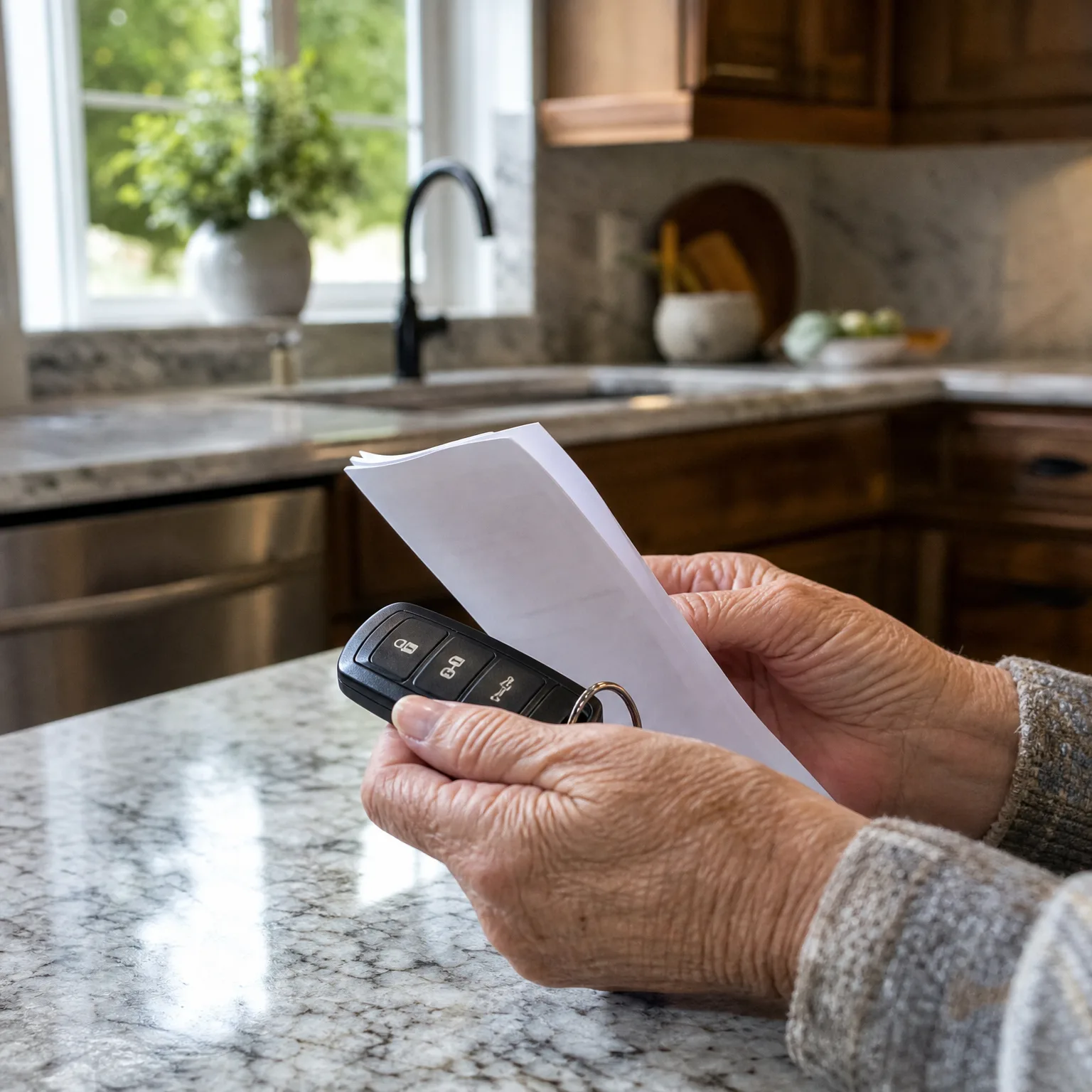
The more common mix-up is the fob itself. If the fob is in a bag left in the trunk, or in another room, the car won't start, and it isn't always obvious why. The fix is simple: keep the fob on you, the same way you'd keep a key on you.
Another habit from key ignition cars is expecting the engine to turn off the moment you take your foot off the brake or open the door. Push button systems vary here. Some shut off automatically when you exit, others need the button pressed again. Check your owner's manual for how your specific car handles this, since driving off with the engine still running, or walking away while it's on, is the real risk worth knowing about.
What decides how easily it clicks: vision, hearing, and the car's feedback
Push button systems rely on a light or a sound to tell you the engine started, since there's no ignition click or key turn to feel. For drivers with reduced hearing, a dim dashboard light can be easy to miss, especially in bright sunlight.
Some cars also require holding the button for a moment rather than a quick tap, and the required press length can vary by model. If a driver taps too quickly and nothing happens, it can feel like the system failed when it just needs a longer or firmer press.
If you or a parent is choosing between cars, it's worth sitting in the vehicle and testing the start sequence before buying, rather than assuming all push button systems behave the same way. A dealer or the owner's manual can show you exactly what your car expects.
Questions people ask about this
What happens if you push the start button without the brake pressed?
In most cars, nothing happens, or the dashboard lights come on without the engine starting. This is a safety feature, not a malfunction. Press the brake pedal firmly and try the button again.
Can a push button start car roll away by itself?
A push button start car behaves like any other car once it's running. It can roll if left in gear or neutral without the parking brake set, the same as a key ignition car. The starting method doesn't change how the transmission or brakes work.
Do push button start cars still need a physical key?
Most have a small backup key hidden inside the fob, for when the fob's battery dies. Check your owner's manual for where it's stored and how to use it, since this detail varies by manufacturer.
Why does my car not recognize the key fob sometimes?
This is usually a weak fob battery or the fob being too far from the sensor inside the car. Try replacing the battery first, since that solves the problem in many cases without any other repair.
Is it safe to leave a push button start car running unattended?
This depends on the specific car's design, since some shut off automatically when the fob leaves the vehicle and others don't. Ask your dealer or check the manual for how your model handles this before assuming it's safe to step away.
If a car's starting system is part of what you're weighing, see how that choice affects what you'd pay.
Before your next renewal or a new car purchase, sit in the vehicle and go through the full start and stop sequence at least once with the manual in hand. Ask the dealer or a family member to walk through it with you if anything feels unclear. If you're helping a parent, practice the sequence together in a parking lot rather than explaining it verbally. Keep the fob in the same place every time, a jacket pocket or a bag you always carry, so finding it becomes automatic. If hearing or seeing the start confirmation is difficult, ask the dealer whether the car offers a louder chime or a brighter indicator light.