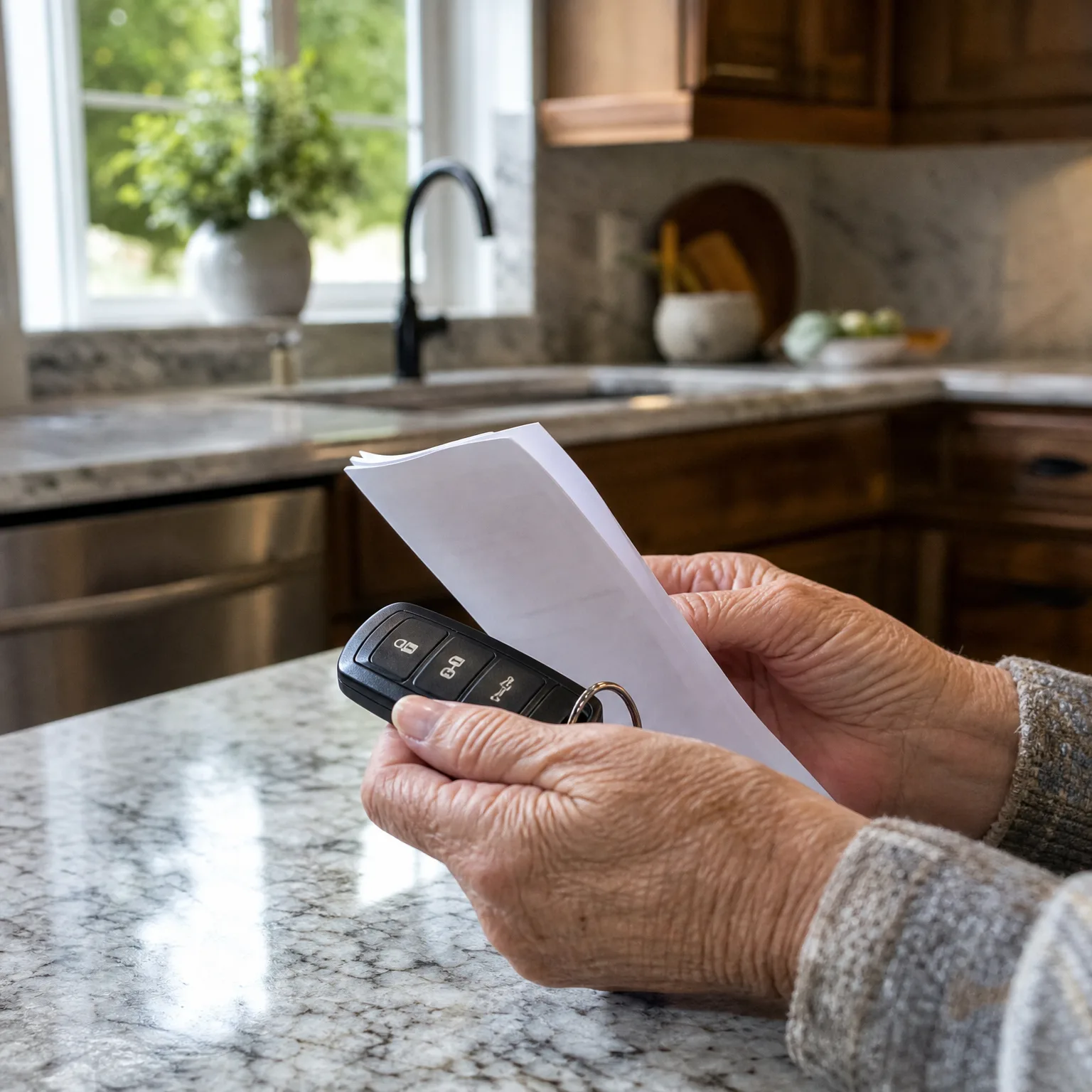
Should a 90 Year Old Still Be Driving
Age alone doesn't answer this. The driver's health, reflexes, and recent record do.
It depends on the driver, not the number
No state takes away a license at 90 just because of the birthday. What decides it is whether this person can still see well enough, react fast enough, and handle a car safely, and that's different for every 90 year old.
The honest way to answer it is to look at what's actually changed. A recent fender bender, getting lost on a familiar route, trouble with highway merges or night driving, these tell you more than age does. If none of that is happening, the age itself isn't a reason to stop.
What the state will actually check
Most states require more frequent license renewal for older drivers, and some add a vision test or drop the mail-in renewal option once a driver reaches a certain age. A few states ask for a doctor's sign-off or a road test if there's a reason for concern.
These rules are set by the state, not by one fixed national age, so what applies to this driver depends on where they're licensed. The DMV website for their state will say exactly what's required at renewal.
A family member can also ask the doctor directly. Many conditions that affect driving, like vision changes, slower reaction time, or certain medications, come up in a regular checkup anyway. That conversation is often more useful than guessing from age alone.
What the insurer is actually pricing
An insurer isn't looking at age by itself either. They're looking at the driving record, how the car is used, and sometimes a driving course completion. A 90 year old with a clean record and a short, familiar commute is a very different risk than one who's had a recent claim.
If the premium went up at renewal, that's worth asking the insurer about directly. Some companies raise rates past a certain age regardless of record, others don't, and this varies by company and by state. Asking them to explain the renewal number is a fair question.
A defensive driving or mature driver course can sometimes lower the premium, but the insurer has to be told about it. Finishing the course isn't enough on its own. The certificate needs to be sent in.
Questions people ask about this
What are the warning signs a senior should stop driving?
Trouble seeing clearly, especially at night, slower reaction to brake lights or pedestrians, and getting confused on routes that used to be familiar are the signs that matter most. A recent near miss or small accident is also worth taking seriously. These matter far more than the driver's age by itself.
Can a doctor report a patient to the DMV for unsafe driving?
In some states, yes, a doctor can file a report if they believe a patient isn't safe to drive, and in a few states they're required to for certain conditions. This is set by each state, so whether it applies here depends on where the driver is licensed. The state DMV or the doctor's office can say what the local rule is.
Does car insurance cost more for drivers over 90?
It depends on the insurer. Some raise rates for drivers past a certain age because of how the numbers work out across all their older policyholders, others weigh the individual driving record more heavily. The only way to know for a specific driver is to ask the insurer directly or compare what other companies would charge for the same record.
How do I talk to an elderly parent about giving up driving?
Start with specific, recent examples rather than the general idea of age. A missed stop sign, a scrape in the garage, or getting lost on a known route gives the conversation something concrete to work from. It often helps to involve the parent's doctor, since a medical opinion can carry more weight than a family member's concern alone.
What is a restricted or conditional license for older drivers?
Some states allow a license with limits, such as no highway driving or no driving after dark, instead of taking the license away entirely. This gives a driver who has some new limitations a way to keep driving safely in lower-risk situations. Whether this option exists, and how to apply for it, depends on the state.
See how this driver's record and situation actually affect the price before deciding anything.
Pull up the renewal notice or license and check the expiration date and any listed restrictions, since that tells you what the state currently requires. If a vision or medical issue has come up recently, mention it at the next doctor's visit and ask directly whether driving is still advisable. If a rate increase shows up at insurance renewal, call the insurer and ask them to explain exactly what changed. If the driver has taken a mature driver safety course, confirm the certificate was actually sent to the insurer, since the discount doesn't apply automatically. Comparing quotes from a few insurers can also show whether the current price reflects this driver's actual record or just their age.